Chemical safety rules for cleaners in Merton borough: a practical guide for safer, smarter cleaning
If you clean homes, offices, carpets, or end-of-tenancy properties in Merton, chemical safety is not a side issue. It is the bit that protects people, property, and your business reputation all at once. The right products can lift grease, remove mould, and leave a room fresh; the wrong mix, dose, or storage habit can create fumes, stains, burns, or a very awkward call from a client. This guide to Chemical safety rules for cleaners in Merton borough breaks the topic down in plain English, with practical steps that fit real cleaning work in London homes and workplaces.
You will find how safe chemical use works, what good practice looks like, where cleaners usually slip up, and how to build a routine that is calm rather than chaotic. No drama. Just solid, usable guidance.
Why Chemical safety rules for cleaners in Merton borough Matters
Cleaning chemicals are useful, but they are still chemicals. That sounds obvious, yet in a busy shift it is easy to rush: a splash here, a stronger mix there, maybe a quick sniff test, which is never a good idea, by the way. In real life, cleaners in Merton work in varied settings: compact flats in Colliers Wood, family homes near Wimbledon Village, busy offices, rented properties between moves, and occasional deep cleans after damp, pets, or builders. Each setting changes the risk.
Safe chemical handling matters because it reduces three kinds of problems. First, there is the immediate safety risk: skin irritation, eye injury, respiratory discomfort, and the occasional panic when someone has mixed products that should never meet. Second, there is the property risk: bleach on fabric, descaler on sensitive stone, or a degreaser left too long on a surface. Third, there is the business risk. Clients notice when a job smells harsh, leaves residue, or creates a complaint. A clean result should not come with a chemical hangover.
In boroughs like Merton, where residential and commercial cleaning often overlap, the cleaner has to think beyond the visible grime. You are not just removing dirt. You are managing exposure, ventilation, storage, waste, and client expectations in a shared environment. That is the real job, to be fair.
Expert takeaway: good chemical safety is not about using fewer products for the sake of it. It is about using the right product, at the right strength, in the right way, with the right controls.
How Chemical safety rules for cleaners in Merton borough Works
At a practical level, chemical safety for cleaners is a simple chain of decisions. Choose the right product. Read the label. Use correct dilution. Protect yourself. Protect the client's space. Dispose of waste properly. It sounds neat on paper, and yes, real life is messier, but the sequence still holds.
Most cleaning products fall into a few broad categories: detergents for general soil, disinfectants for targeted hygiene tasks, alkaline cleaners for grease, acids for limescale, solvents for certain stains, and specialised products for carpets, upholstery, glass, or mould-related jobs. The risk changes with the chemistry. A mild all-purpose cleaner is very different from a strong descaler or solvent-based product. If you treat them all the same, you are already off track.
The working process usually includes:
- Assessment: identify the surface, the soil type, and any sensitivities such as natural stone, fabric, pets, children, or asthma concerns.
- Selection: choose the least aggressive product that will still do the job properly.
- Dilution: follow the label and avoid the classic "just add more" temptation.
- Application: use controlled amounts and avoid aerosol drift or over-wetting.
- Ventilation: open windows or create airflow where possible, especially with stronger agents.
- Cleanup: remove residue, rinse if needed, and return items to safe storage.
If a task involves multiple chemicals, the rule is simple: one product at a time unless the manufacturer explicitly says otherwise. Mixing cleaning products is where avoidable incidents happen. Sometimes the simplest habit is the safest one.
For cleaners who also handle end-of-tenancy jobs or larger one-off deep cleans, it helps to think in zones. Kitchens, bathrooms, carpets, and upholstery should be treated as separate chemical environments. A product that works beautifully in a tiled bathroom might be a disaster on fabric or sealed wood. We cover those kinds of job differences elsewhere too, especially in deep cleaning Merton and carpet cleaning Merton, where surface-specific methods matter a lot.
Key Benefits and Practical Advantages
Safe chemical practice is not just about avoiding accidents. It improves quality. That is the part people sometimes miss.
- Better results: correct dilution often cleans more effectively than overuse, because residues do not interfere with the finish.
- Less waste: measured product use stretches stock and avoids unnecessary replenishment.
- Cleaner finishes: surfaces are less likely to end up sticky, streaky, or dull.
- Health protection: fewer fumes, less skin contact, and lower risk of irritation.
- Client trust: clients feel more confident when a cleaner works neatly and explains what is being used.
- Lower complaint risk: fewer stains, less damage, fewer "what happened to my countertop?" moments.
There is also a quieter benefit: a safer workflow makes jobs less stressful. If your products are labelled clearly, stored properly, and matched to the task, you spend less time second-guessing yourself. You will notice that the whole day feels more controlled. Less faff, as people say round here.
For households with pets, children, or allergy concerns, these benefits are even more obvious. A correctly chosen product with proper ventilation can be the difference between a refreshing clean and an irritating one. It is the small things, really.
Who This Is For and When It Makes Sense
This guidance is for professional cleaners, self-employed cleaners, domestic cleaning teams, office cleaners, and anyone carrying chemicals into a client property in Merton borough. It is also useful for landlords, letting agents, property managers, and homeowners who want to understand what safe cleaning should look like when they hire someone.
It makes the most sense in these situations:
- regular domestic cleaning where multiple products are stored in a caddy or van
- end-of-tenancy work where bathrooms, kitchens, and floors all need different treatments
- office cleaning where shared surfaces and ventilation matter
- carpet or upholstery work where moisture and product residue must be controlled
- post-renovation or builder's clean jobs where dust and chemical cleaners may both be in use
- mould, damp, or odour jobs where strong products can be tempting but need careful handling
If you are a client, you do not need to memorise every product category. But it helps to ask sensible questions. What is being used? Is the room ventilated? Are pets kept away during treatment? What happens if a surface needs rinsing? Good cleaners should welcome those questions. If they do not, that is telling.
For people comparing service options, the broader service context also matters. A company that handles domestic cleaning in Merton, office cleaning, and end-of-tenancy cleaning should be able to explain chemical handling differently for each setting. One size rarely fits all.
Step-by-Step Guidance
If you want safer chemical use without making the job slow, use a repeatable routine. Here is a practical version that works well on real jobs.
- Check the surface first. Is it stone, sealed wood, laminate, stainless steel, fabric, grout, or painted trim? Surfaces matter more than people think. A cleaner's best friend is still a quick mental check.
- Identify the dirt. Grease, soap scum, limescale, dust, body oils, pet residue, and mould-related staining all need different approaches.
- Read the label every time. Even if you have used the product a hundred times. Product recipes and directions do change, and tired eyes miss details.
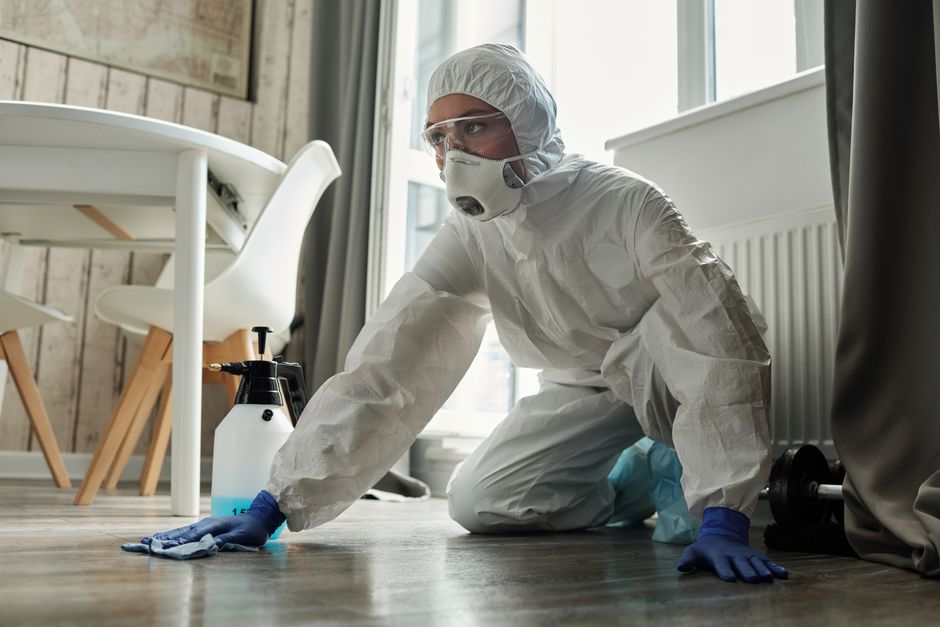
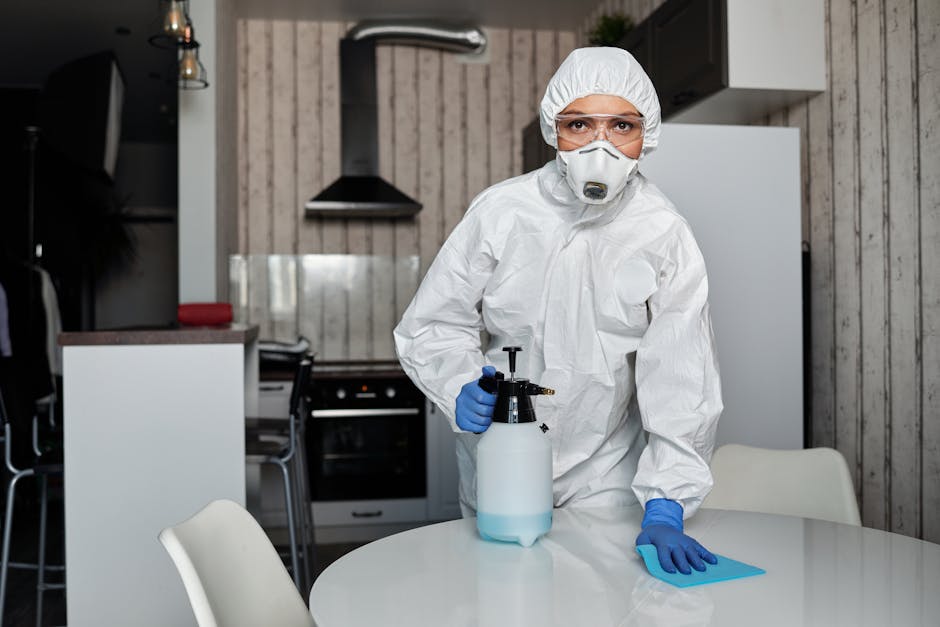
- Prepare ventilation and PPE. Gloves are basic. Eye protection and masks may be needed for stronger products or dusty, poorly ventilated spaces. The right PPE is practical, not theatrical.
- Use the minimum effective amount. Start light. You can always repeat a controlled application. You cannot always un-do an over-strong one.
- Keep chemicals separate. Use separate cloths, pads, or sprayers where needed. Never re-purpose a bottle without relabelling it clearly.
- Test first on sensitive surfaces. A hidden patch can save a lot of grief, especially on upholstery, stone, and older finishes.
- Rinse or neutralise where required. Some cleaners leave residue if they are not removed correctly. That residue attracts soil or damages the finish over time.
- Store immediately after use. Don't leave open bottles in a bathroom sink or on a windowsill. It only takes one bump.
- Dispose of waste properly. Follow the product instructions and local waste expectations. Chemical leftovers are not just "rubbish". They need a bit more thought.
A small real-world example: if you are cleaning a kitchen in Morden after a tenancy, the hob may need a degreaser, the sink may need a different cleaner, and the worktop may only need a mild surface product. One room, three chemistry decisions. That is normal.
Expert Tips for Better Results
A few habits make a disproportionate difference.
1. Build a product hierarchy
Keep a preferred order of use. Start with the mildest product that will do the job. Escalate only if needed. This saves surfaces and often saves time too.
2. Label everything clearly
Transfer bottles need proper labels. Mystery bottles are a needless risk. If a product is decanted, you should know what it is, how it is diluted, and when it was prepared. That sounds simple because it is simple.
3. Respect dwell times
Many products need a short period to work. Wiping them away too soon can be less effective; leaving them too long can damage surfaces. The label usually tells you what matters.
4. Watch the room, not just the surface
In a small bathroom or closed office, fumes build up faster than you expect. Open a window, use a fan if appropriate, and avoid over-applying spray in enclosed spaces.
5. Separate the "looks clean" from the "is safe" test
A surface may look finished but still be slippery, residue-covered, or chemically active. Touch and smell are not enough. Better to give a final rinse or wipe when the product calls for it.
One more thing, and this is a bit boring but important: keep safety data and product instructions accessible. Not buried in the back of a van under a mop bucket. Accessible means usable in the moment.
If you are handling higher-risk jobs, such as mould treatment or post-water-damage cleaning, the safer route is often to choose a specialist service. For example, our mould and damp treatment for South Wimbledon basements article explores how moisture and product choices interact in real properties.
Common Mistakes to Avoid
Most chemical incidents in cleaning are not exotic. They are everyday mistakes made under time pressure. The usual suspects are familiar.
- Mixing products "for extra strength": this is the big one. It can create dangerous fumes or unpredictable reactions.
- Using too much product: more is not better. It often means more residue, more rinse time, and more complaints.
- Ignoring surface compatibility: natural stone, untreated wood, soft furnishings, and some plastics react badly to the wrong cleaner.
- Skipping gloves because the job is "only quick": quick jobs are where habits slip.
- Using the wrong cloths or pads: cross-contamination happens fast when cloths move from toilet areas to kitchen surfaces without control.
- Storing chemicals loosely in a van: bottles tip, leak, and sometimes combine. Not ideal, obviously.
- Leaving spray bottles unlabelled: this creates risk for everyone, not just the person who filled them.
- Forgetting to ventilate: especially in bathrooms, basements, and small offices.
There is also a quieter mistake: assuming the client knows what you are doing. They usually do not. If a product has a stronger smell or needs a room left closed for a short while, say so plainly. That avoids awkwardness and helps keep everyone safe.
Tools, Resources and Recommendations
You do not need a warehouse of gear. You need the right essentials, kept in good order.
| Item | Why it helps | Good practice note |
|---|---|---|
| Labelled spray bottles | Prevents confusion and accidental misuse | Never use anonymous bottles for mixed solutions |
| Nitrile gloves | Protects hands from routine exposure | Change gloves between dirty and clean zones |
| Eye protection | Reduces splash risk for stronger products | Especially useful for bathroom and descaling work |
| Microfibre cloths by task | Limits cross-contamination | Colour-code if possible |
| Ventilation tools | Helps disperse fumes and moisture | Open windows where safe, use airflow sensibly |
| Secure storage box or caddy | Keeps chemicals upright and organised | Prevents leaks during transport |
Beyond equipment, the most useful "resource" is a consistent routine. A tidy chemical kit, simple labels, and a few rules that never change will do more for safety than a pile of fancy gadgets. Truth be told, the fancy gadgets are often the ones gathering dust.
For readers comparing cleaning packages, it can also help to review the wider service scope at services overview and the practical booking information in pricing and quotes. Chemical safety should be part of the service conversation, not an afterthought.
Law, Compliance, Standards, or Best Practice
This section needs careful wording. Chemical safety in cleaning is shaped by UK health and safety duties, product labelling, workplace risk assessment, and the general duty to handle substances responsibly. The exact obligations depend on whether you are self-employed, running a team, working on commercial contracts, or cleaning in a domestic setting.
In practice, sensible compliance usually means:
- reading and following product instructions
- carrying out a basic risk assessment for stronger or repeated chemical use
- training staff on safe dilution, storage, and spill response
- keeping chemicals in suitable containers and away from food or personal items
- using PPE where the task requires it
- making sure waste and residues are managed in line with the product guidance and local expectations
For cleaners working in Merton, local expectations also matter. A property manager or landlord may have their own site rules, and waste handling can be particularly important after larger cleans or renovation work. If you are handling debris, packaging, or leftover product containers, it is smart to follow the relevant job instructions carefully. Our article on Merton council rules on cleaning waste and fines gives a useful local angle on waste awareness without turning the whole thing into a legal maze.
If you are cleaning after builders, the compliance picture often becomes a bit more layered. Access, disposal, and residue control all matter. In those cases, permit rules for builders site cleaning in Merton can be a relevant starting point for understanding how site work differs from a standard home clean.
Best practice, if we strip away the jargon, means this: choose safer methods first, document the higher-risk ones, and never pretend you know more than the label tells you. That humility saves trouble.
Options, Methods, or Comparison Table
Different cleaning situations call for different chemical approaches. Here is a practical comparison.
| Method | Best for | Pros | Watch-outs |
|---|---|---|---|
| Mild general-purpose cleaning | Routine dust, fingerprints, light soil | Low risk, easy to control, suitable for many surfaces | May not shift heavy grease or limescale |
| Targeted specialist cleaner | Bathrooms, kitchens, glass, upholstery, carpets | More effective for a specific task | Must match the surface carefully |
| Stronger chemical treatment | Heavy build-up, stubborn deposits, remedial work | Can deliver fast results | Higher risk, more PPE, more ventilation needed |
| Mechanical-first approach | Dust removal, scrubbing, pre-treatment | Reduces chemical use and residue | May take more physical effort |
In many homes, the best answer is a blend. Start with mechanical removal, then use a mild cleaner, then only step up if needed. That approach is often safer and cheaper. And no, it is not glamorous. But it works.
For surface-sensitive jobs, the link between method and result is especially important in upholstery cleaning in Merton and one-off cleaning, where overuse can do more damage than the dirt itself.
Case Study or Real-World Example
A small rented flat in Morden needed a move-out clean after a long tenancy. The kitchen had grease on cabinet fronts, the bathroom had limescale, and the living room carpet had a faint pet smell. Nothing dramatic, just the usual mix of "life happened here."
The cleaner did not reach for the strongest product first. Instead, the process was split into zones. The kitchen was degreased using a controlled application and wiped fully clean. The bathroom received a limescale product with the window open and the door kept shut during dwell time, then rinsed carefully. The carpet was treated separately with a fabric-safe product rather than a general surface spray. Each area had its own cloths. Each product had its own moment.
The result was better than the client expected, but more importantly, nothing was damaged. No cloudy cabinet finish. No harsh chemical smell left behind. No surprise reaction between products. The job felt calm, which is honestly what you want on move-out day when everyone is already a little tense.
If you are dealing with similar turnover work, our related local guides like the Morden SM4 flats moving-out cleaning checklist and the Colliers Wood High Street moving-out cleaning guide show how chemical choices fit into real end-of-tenancy planning.
Practical Checklist
Use this before, during, and after a chemical-based cleaning job.
- Have I identified the surface correctly?
- Have I chosen the mildest suitable product?
- Is the room ventilated enough for the product I am using?
- Are gloves, eye protection, or other PPE needed?
- Are all bottles clearly labelled?
- Are chemicals being stored upright and separate from food, cloths, and personal items?
- Have I confirmed whether the product needs dilution, dwell time, or rinsing?
- Have I kept incompatible products away from each other?
- Are the correct cloths and pads being used for the task?
- Have I warned the client about any strong smell, temporary restriction, or drying time?
- Have I checked for residue, streaking, or slip risk after finishing?
- Have I disposed of waste and empty containers correctly?
If you tick most of those boxes consistently, you are already ahead of many rushed routines. That is not meant as a dig. It is just how the job tends to go when people are busy.
Conclusion
Chemical safety in cleaning is not complicated, but it does reward discipline. In Merton borough, where cleaners move between homes, offices, carpets, upholstery, and tenancy changeovers, the best approach is steady, not flashy. Use the right product. Respect the label. Ventilate. Protect hands and eyes. Keep chemicals clearly stored and separate. And if a job seems to need stronger treatment than usual, slow down and assess it properly before you spray anything.
That approach protects surfaces, keeps clients comfortable, and makes your own workday smoother. It also builds trust, which in cleaning is worth a lot. People remember when a cleaner is careful, calm, and consistent. That part sticks.
If you want support planning a safer, better-organised clean in Merton, explore our services and compare the options that fit your property and schedule. For straightforward advice or a tailored quote, start with our request a quote page or browse the latest updates in our blog. A good clean should leave a place lighter, not riskier.
Get a free quote today and see how much you can save.
Frequently Asked Questions
What are the basic chemical safety rules for cleaners in Merton borough?
The basics are: read the label, use the right dilution, ventilate the room, wear suitable PPE, keep products separate, and store them safely. That simple framework covers most everyday cleaning work.
Can cleaners mix different cleaning products to get a stronger result?
No, not unless the manufacturer explicitly says it is safe. Mixing products is one of the easiest ways to create harmful fumes or damage a surface. Stronger is not automatically better.
Do domestic cleaners need PPE every time?
Not necessarily every single task, but gloves are usually sensible, and eye protection or masks may be needed for stronger chemicals or poorly ventilated spaces. The product and the job decide that.
How should cleaning chemicals be stored in a van or cupboard?
They should be kept upright, clearly labelled, and separated from food, personal items, and incompatible products. A secure caddy or box is useful because bottles can tip during travel.
What should a cleaner do if a client is sensitive to smells or chemicals?
Use milder products where possible, increase ventilation, keep the room clear while the product works, and communicate clearly about drying or airing time. If the sensitivity is significant, it may be worth choosing low-odour options and avoiding stronger treatments.
Are chemical safety rules different for carpet cleaning?
Yes, they can be. Carpets and upholstery often need fabric-safe products, controlled moisture, and careful residue removal. A general hard-surface cleaner is usually the wrong choice.
How do I know if a surface is too delicate for a strong cleaner?
If the surface is natural stone, untreated wood, soft fabric, or an older finish, treat it as sensitive until proven otherwise. Test a hidden patch and use the least aggressive option first.
What is the safest way to clean bathrooms with limescale removers?
Ventilate the room, use the product exactly as directed, avoid mixing it with other cleaners, and rinse the area properly if required. Bathrooms are often small, so fumes can build up quickly.
Do Merton cleaners need special rules for waste from chemical cleaning?
They should follow product instructions and local waste expectations carefully, especially for larger cleans, renovation work, or anything involving residue containers and contaminated materials. For practical local context, our article on cleaning waste and fines is helpful.
How often should chemical safety procedures be reviewed?
Regularly. If products change, staff change, or the types of jobs change, the procedure should be reviewed too. Even small changes can affect how safely a job is carried out.
What is the most common chemical safety mistake cleaners make?
Using too much product and assuming it will clean better. That usually leads to residue, wasted product, and sometimes surface damage. It is a very common habit, especially when people are in a hurry.
Where can I find more Merton-specific cleaning guidance?
You can browse the site's related articles and service pages, including guidance on deep cleaning, end-of-tenancy work, and waste handling. If you need help choosing the right service, our team is available through the contact page.